











Hitoya and Jyushi: A ship manifesto
by admin 2 w

Hitoya and Jyushi. They were literally made for each other.
Why do I ship them?
Because I like Hitoya a lot, and nothing has helped Hitoya heal as much as looking after Jyushi has. Because Jyushi brings out the best in Hitoya, revealing what a loving, generous soul he possesses underneath his jaded gruffness.
Because I like Jyushi a lot, and Jyushi likes Hitoya a lot in canon (to such an extent that it's really, really easy to imagine how his platonic admiration could evolve into romantic attraction). And since I like Jyushi so much, why would I ever want to deny him the chance to be with his Hitoya? Have you heard the reverence with which he utters Hitoya's name? Have you heard the unmistakable love in his voice? How dare I deny him happiness! How dare I deny him his rightful place by Hitoya's side!
As a fan, I want my beloveds to be happy. And they've both had such a rough time of it. So let Jyushi be doted on by his inappropriately older boyfriend. Let Hitoya experience the love of someone who loves him unconditionally, who thinks he's special in a way he can't see himself without relying on the external validation of being #1! Let him be Jyushi's #1 by a large margin! Let them support each other as they heal from their respective traumas and grow together!

Setting the stage
First, let's establish the context in which Hitoya and Jyushi exist, in which they were created, and what came before them.
In the beginning (ye olde 2017), King Records created Hypnosis Mic. Two years later, Bad Ass Temple was born, first announced at the Fourth Live, then debuting in November 2019.
Bad Ass Temple's leader Kuko clearly came into existence to orbit Ichiro, de facto protagonist of the series. Kuko already existed as a figure from Ichiro's past in the TDD manga. That meant there was an opportunity to link Kuko's two remaining teammates to 1) other existing cast members, and/or 2) each other.
First, the writers decided to link Kuko to Hitoya. This makes a lot of sense—Kuko the delinquent having a run-in with the law to demonstrate he's kind of unhinged and a little fucked up, if not principled and compassionate—and establishes Hitoya as the go-to guy for bullying cases.
Second, they decided to link Hitoya to Jakurai. I personally consider this uninspired, slapdash world building (of which there are many such examples in this series), a connection largely founded on both characters being the same age. Particularly in this series, same-age duos are shorthand for "look how close these guys were/are!" See: Ichiro and Kuko, Hifumi and Doppo, Sasara and Rosho (Ramuda and Gentaro are a bit of an outlier, but as we know, Ramuda is't actually 24).
Let's put ourselves in the writing room, in the writers' shoes circa late 2018. We're introducing this totally new character next year, and he's gonna be older than most of the cast, so what should we do with him? Graft his story onto the oldest character thus far, who is conveniently part of the most popular Division. You know, the one with the legion of unhappy salarywomen behind it, whose disposable income won them the first popularity contest. Good work, team, that one's done and dusted.
Instead the writers decided to focus their brain power on connecting Hitoya to Jyushi. Unlike Kuko, who knew Ichiro and Hitoya before the start of the story, and Hitoya, who knew Jakurai and Kuko, Jyushi has no other pre-existing connections to the cast beyond Hitoya. Thus KR cemented his relationship with Hitoya as a key feature of his story, a reason why he's in BAT in the first place. Jyushi likely would have never met Kuko if not for Hitoya, while Hitoya would have never teamed up with Kuko if not for Jyushi.
Seeing as Jyushi initially has no outside connections to the rest of the cast, the writers needed to make his bond with Hitoya like superglue. Flinging marketable pretty boys at the wall and seeing who stuck where would no longer cut it. It's 2019, two years in, and we, the audience, have seen the original kitchen-sink Divisions forge real bonds between their teammates in spite of, well, everything. So no, we needed actual shared history for the new guys. Kind of like what Buster Bros had. The only original group that makes a modicum of sense on paper.
Hence why the writers made Sasara and Rosho like that. Codependent extrovert/introvert situationship 2.0. Rei of course has his sons, and distantly Ramuda. And even if he didn't, Rei gets a pass because Rei has his fingers in so many different pies that he could insert himself anywhere and we'd just smile and nod.
But I digress.
The White Falcon
The Gretsch White Falcon guitar was first introduced in BAT's second drama track, Harmonious Cooperation, and in chapter 10 of the Side DH/BAT manga, both of which came out in March 2021.
From the time of BAT's first album in November 2019 until March 2021, there was zero indication that Hitoya knew how to play guitar. And I would know because I was plugged in back then.
Now lots of people headcanon'd that Hitoya played guitar. As a rockabilly fan who's dressing like that, busting out his two-tone creepers for trials, obviously he's REALLY into the music. It's clearly not a phase. But there weren't any hints of his musical ability.
The writers introduced Hitoya the guitarist in two phases: first, Harmonious Cooperation. Second, the first DH/BAT manga, when we had two original storylines featuring Hitoya and Jyushi. Here we learn how Hitoya helped a young Jyushi out of his depressive funk: with funky sounds. Through the power of music. We see Hitoya absolutely shredding the guitar. (Here Jyushi gets all sparkly eyed and flushed and sweaty with excitement…) Hitoya is ALSO good enough to play a song he heard once (at the concert with Jyushi) by ear, which is very sexy of him.
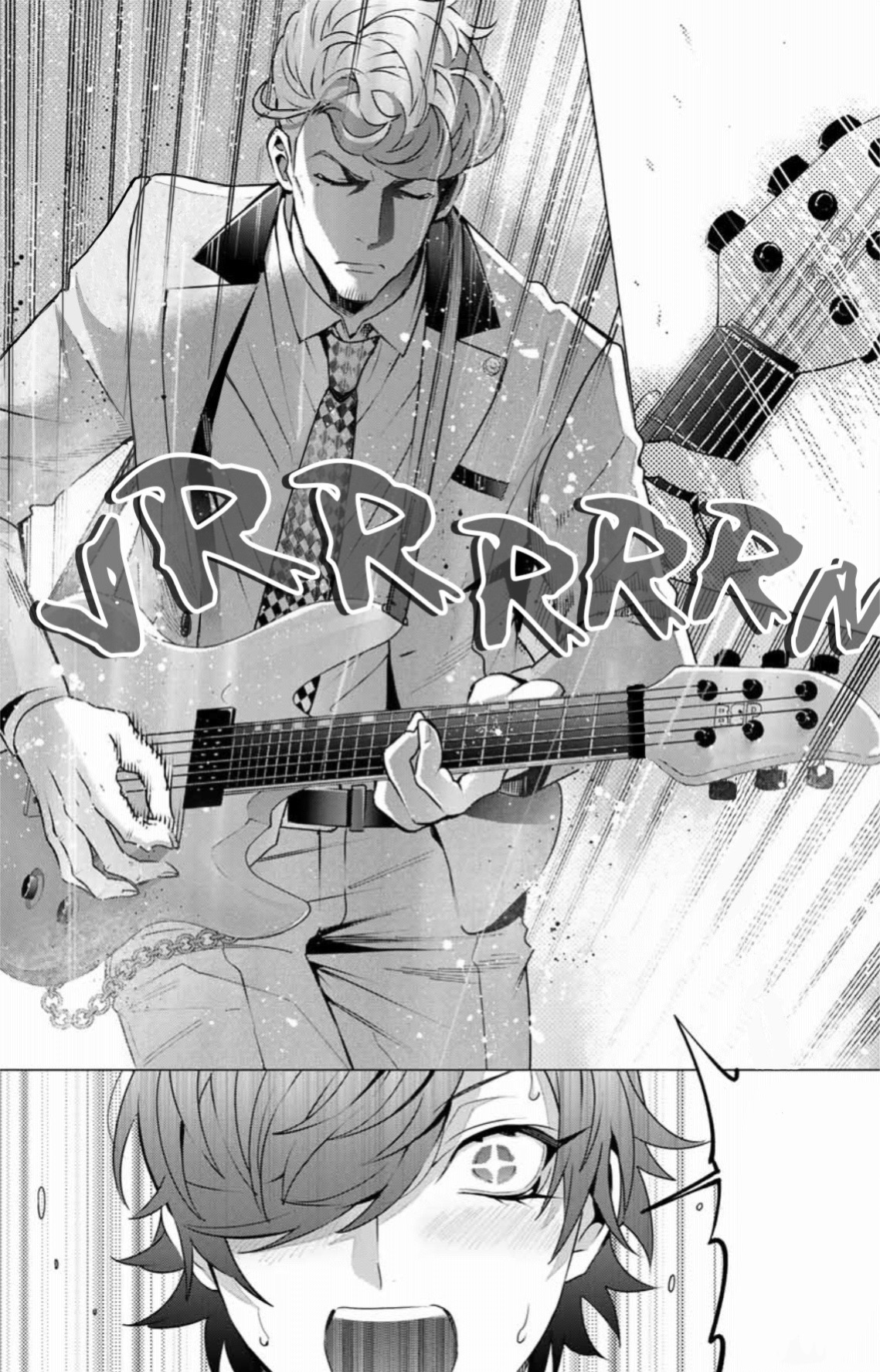
The White Falcon is a truly beautiful thread connecting Hitoya and Jyushi's narrative. Hitoya took up the guitar when he was depressed after his brother Sora's death (a decision credited to Jakurai's sagacious middle school self). He held onto it for the next fifteen-odd years as a reminder of his brother. And when he sees someone just as depressed, just as in need of something to work toward, he sets it free. He gives it to Jyushi knowing it will save him just as it saved Hitoya.
 |
||
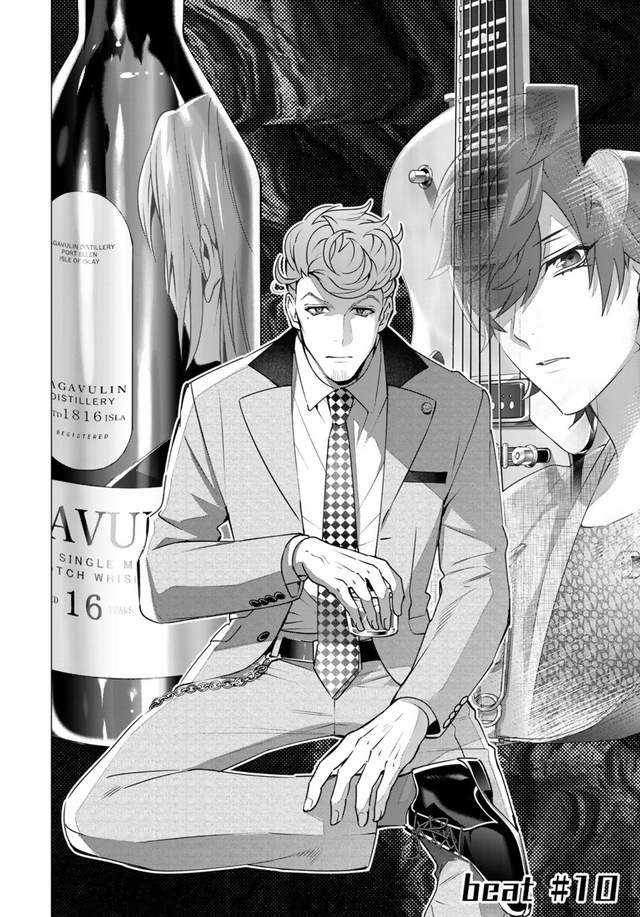
The manga frames the White Falcon as bridging the painful past and the future. It's right there on the chapter cover page. Hitoya sits in the middle of the layout, a glass of whiskey in hand, his expression a little gruff, or as gruff as a fujobait bishonen can look, with what could be described as "a mood of mild depression" hanging over him. To the left, we have a bottle of Islay (Lagavulin, as real ones know), Hitoya's drink of choice, which reflects the back of middle school Jakurai's head as he looks away from the viewer, away from Hitoya. To the right, we have the White Falcon, and in its reflection Jyushi looking at the viewer, angled toward Hitoya, a curious expression on his face. The past; the future.
Overcoming the past and forging your own future is the defining theme of BAT as a group. It's a thesis Hitoya puts forth in Bad Ass Temple Funky Sounds: "the past is the past but do not forget."
It's a very Buddhist philosophy. You can't change the past. Nothing will change it. Wallowing in what went wrong only causes unnecessary suffering. And suffering is already an intrinsic part of life. Don't make it even harder for yourself by adding more to the pile!
So you have to accept what happened happened even when it fucking sucks. Even when it was the worst thing to ever happen to you. All you can do is accept that it sucked, and then you learn to let go of how much it sucked and turn your attention to the present. And that's how you keep living. Go forward.
Of course, that's hard to do. Even Kuko couldn't do it when it came to Ichiro. See: him screaming about a red bandana in "Kaigen."
The character quote
It's right there in Hitoya's character quote: reaching out to the moon.
That is a direct reference to Jyushi, Mr. 14th Moon himself. I dare you to tell me otherwise.
Both Hitoya and Jyushi's quotes convey a sense of hope in otherwise hopeless circumstances. Both extol the virtue of trying in the face of the impossible. They naturally complement each other. I have to wonder whose quote the writers picked first. Perhaps Hitoya, as his character design seems very informed by the (attributed) source of his quote, Joe Strummer (iykyk).
But it's also very possible the writers googled "inspiring quotes about never giving up" and saw both on the same list. Two birds, one stone.
The kanji
The kanji for Hitoya's name (獄) has 14 strokes.
An insane coincidence, perhaps. Certainly one that drives me insane.
Again, whose name was chosen first? Did the writers in turn build Jyushi's motif of the number 14 inspired by the stroke count? Probably not. They only have a small pool of numbers and names related to moons.
They could have gone with 16th Moon and named him Matsuyoi.
Perhaps the other way, then: they chose Hitoya's name after the 14 scheme was picked for Jyushi. Or maybe it's just divinely inspired; who can say.
The speakers
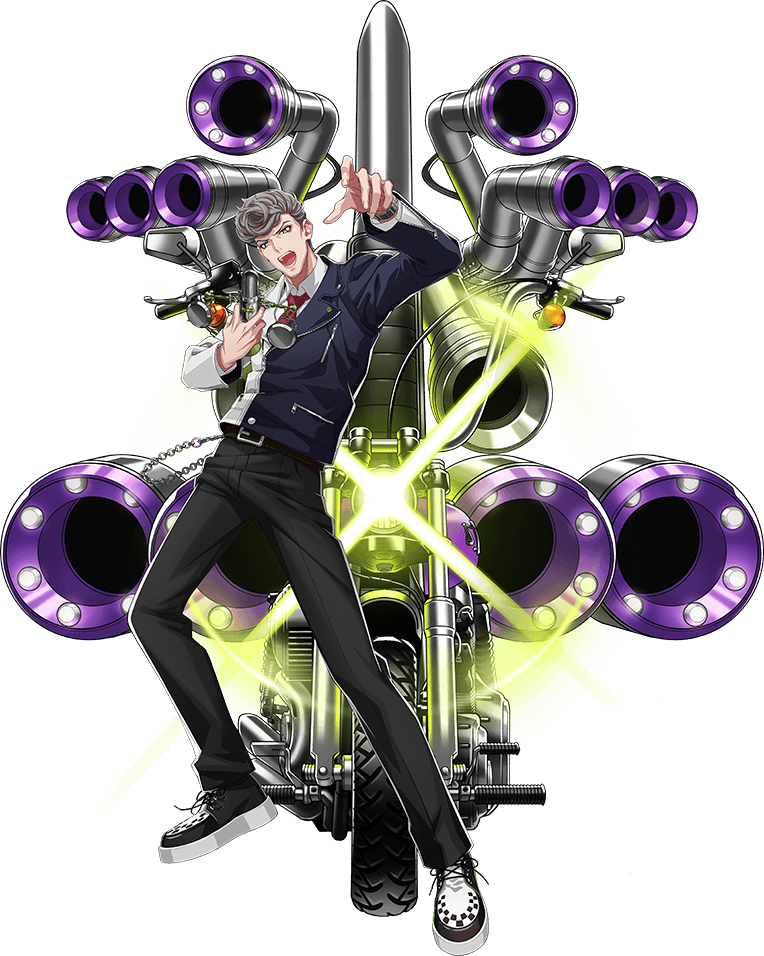
When BAT's Hypnosis Speakers were revealed in 2020, an eagle-eyed Japanese fan on Twitter noted that Hitoya's motorcycle speaker has 14 headlights on it. Count ‘em. Or not—you don't need to count to notice there's an obscene amount of headlights on that bike. This was clearly an intentional design choice, because no artist is drawing that much detail if they don't have to.
 |
||
So what's the significance of the headlights?
Darkness and light are another common theme in BAT's songs. The Jyushi–Hitoya duet "Noctiluca" builds its chorus around the maxim that you can learn to shine even in the darkest times. You can learn to live with your trauma, and while it will never be entirely healed like it never happened in the first place, you can move forward, especially with the help of others—with love, perhaps, in any form.
Which brings us to Jyushi's speaker.
Jyushi's speaker doesn't have any obvious references to Hitoya, as it's undoubtedly inspired by the loss of his grandmother. One of the most pivotal moments of his life, and the most traumatic by far. But here it's been reclaimed as a source of power for him.
That's wonderful, and it fits with Jyushi's character trajectory.
Jyushi's actually further along in his Buddhist "don't cling to the past" journey than Hitoya. Hitoya has essentially built his entire career on getting revenge for the injustice his brother suffered. Hitoya wears his trauma like a hairshirt of sorts, a constant reminder of his helplessness. It keeps him stuck and stunted and mired in his suffering. But it's the only way he knows how to honor the memory of his brother. He says as much in Harmonious Cooperation, when Kuko finally makes a breakthrough with him: "I don't want to forget my brother."
Jyushi doesn't want to forget his grandmother, either, and so he subconsciously memorializes her in his speaker.
But Jyushi was once lost too. And Jyushi would not have gotten this far without Hitoya. Hitoya, who was moved enough by Jyushi's case to make a house call checking on him, who keenly recognized the depressive episode Jyushi was stuck in (as Hitoya himself experienced after losing his brother).
Jyushi learned to keep living through music, and Hitoya played an instrumental part in that.
The ages
We arrive at the most contentious part of the whole ship!
I understand why it puts many people off, and I don't fault them for it. This is a ship for people who want a hearty helping of taboo to go with their wispy idolboy yaoi. Something even more scandalous than a 35 year old and a 24 year old, or a 25 year old and a 19 year old, or perhaps those 1st DRB-era ships involving the other Buster Bros.
Plainly: it's a 17 year age gap.
At 18 years old, Jyushi is just shy of being exactly half Hitoya's age. He is also smack dab at the age of consent in Japan and the age in which people are recognized as legal adults in most of the world (including Japan as of 2022).
(Japan's age of majority, wherein you "come of age" as an adult, was traditionally 20. This has since been lowered to 18, making it in line with most other countries. Japan nevertheless kept the age of buying alcohol and cigarettes as 20, just as we have it at 21 in the USA.)
Hitoya has an offhand line in BAT's first drama track which I find… interesting: "Even if barely, it isn't unlawful, so it shouldn't be a problem."
Sure, you could call Jyushi barely legal. But as Hitoya so helpfully concludes, there's no barely in the eyes of the law: you either are or aren't.
Now the writers didn't have to make Jyushi 18 years old. He could have been 19 like Kuko and virtually nothing about his character or his dynamic with his teammates would change besides figuring out if he would address Kuko with -san or not (he probably would, even if he would be a few months older than Kuko in this hypothetical). He could have even been 20 like Dice and I think we'd still buy it, this 6'1" crybaby toting around a plush toy pig. Either way, it still would've been a huge age gap with Hitoya—more than most people find acceptable, even in the realm of fiction. But the writers did settle on age 18 and honestly? I'm not mad about it. It makes things interesting. It's a funny gag because Hitoya knows the law, baby. Of course he would never be untoward to someone underage!
(Besides, Hitoya couldn't groom his way out of a paper bag.)
Even beyond the whole age gap thing, Jyushi's age seems very intentionally chosen.
Jyushi's name can be read as 14. He met Hitoya at age 14 (the other thing that turns people off about this ship, and I don't have much to say about that beyond "they're not real so I don't particularly care"). This was a major year for Jyushi: he underwent trauma that made him want to die, his life was saved, his passion for making music was sparked.
Hitoya's name can be read as 18. This is another pivotal year for Jyushi: when he takes major steps to work on himself, when he's introduced to Kuko by Hitoya, when he becomes a part of BAT. His relationship with Hitoya changes, too; they become colleagues in rap, brothers-in-arms, family.
Hitoya doesn't really have any authority over Jyushi at this point in the narrative, if he ever had much to begin with. Jyushi isn't obligated to listen to Hitoya at all. We see this in their very first interaction in the series, in the first drama track: Jyushi keeps showing up to Hitoya's office despite Hitoya repeatedly telling him not to. Jyushi even laughs in Hitoya's face when Hitoya tries to put his foot down and threatens to sue him. Generally Jyushi respects Hitoya, of course, but he doesn't owe him that respect. Not as an authority figure. Not as a teacher or uhhhh a parent. No, Jyushi chooses when he wants to listen to Hitoya and when he wants to steamroll him.
For all his meekness, Jyushi is actually very headstrong. He uses -san with Hitoya (and everyone else older than him), of course, as well as the -ssu suffix as a signifier of his politeness. But even with Kuko, whom he calls his master, he's quick to push back and talk back, and is otherwise dragged into doing Kuko's bidding kicking and screaming—until he's had enough of Kuko's bullshit and he's the one dragging Kuko away.
Later in the first drama track, in a moment of reverse psychology, Hitoya basically tells Jyushi to fuck off when Jyushi won't commit to changing himself. Jyushi, of course, doesn't. Because Jyushi doesn't want to! He chooses to stay and decide for himself to train with Kuko.
And with the age gap comes the beauty of forging a deep connection with someone so different from you, where you never would have thought to look for it or expected to find it in the first place. But instead, by some stroke of fate, it finds you. What a rare miracle that is! Incredible ship dynamic. It injects an unspoken pathos into their relationship and leaves the angsty stuff for circumstances beyond their locus of control. If only I weren't so much older than you. If only I had been born earlier.
And it's extra poignant from the perspective of Hitoya, who had to wait 31 years to meet someone he connected with the way he connected with Jyushi, and 35 years in total before falling in love with someone like Jyushi, and oof. That's so long! But it means there's always hope too, no matter how many years it might take to find your soulmate!
OOF!!!!!!
The songs
A major theme throughout Hitoya and Jyushi's songs, both solo, group, and duet, is sharing each other's pain. "I can't erase your pain for you, but we can help each other through it. We can live on together."
Their duet "Noctiluca" is incredibly touching.
It's actually really funny how the bonus duets have gone from "two guys sweating in a sauna five feet apart ‘cause their homoerotically charged friendship is gonna end in flames" to "two guys who are perhaps the only people in the series who understand the other's pain, who share the same heartbreak, who pledge to keep on living even though it might be easier to give up, and all because they have each other to draw strength from."
And from a musical perspective, their voices blend beautifully! Jyushi's sweet, soaring tenor and Hitoya's rumbly baritone! It's a pleasure to listen to them. They don't drown each other out, or muddle together in an indistinguishable vocal slurry. They compliment each other.
The bridge in their group latest song "Shinjiru Chikara" sure is something. Back and forth, Jyushi–Hitoya trading lines. "Me and you together." Me and you, us two. (Fuck Kuko, I guess??) It reminds me of the bridge in "Why?" by Bronski Beat. Which is a landmark gay love song.
It speaks to their bond. The mutual reliance they have on each other. The loss they share.
(Kuko is there too, of course, but let's be honest, he's never quite shared the level of connection of Hitoya and Jyushi.)
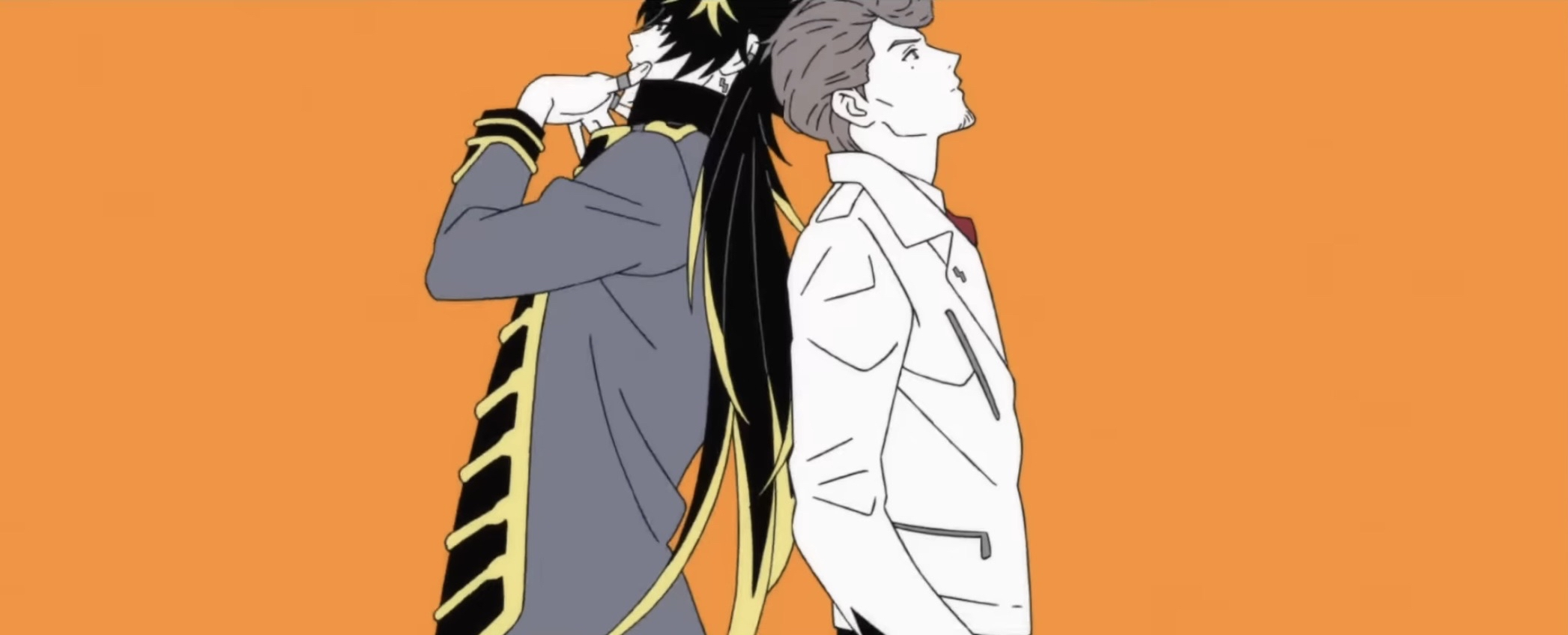
They lean on each other, as was given literal form in the Glory or Dust music video. They trust each other to watch each other's backs. They're coming from different perspectives to strike a power couple pose. (Note they're the only 2/3-gumi pair who physically touch.)
 |
||
Personally, I find it all deeply romantic.
The physical touch
It's everywhere.
Hitoya has a tendency toward physical affection with those he's closest to, but especially with Jyushi.
In order: the hand grip; the life-saving hug; the comforting ruffle of Jyushi's hair as Jyushi cries after Iyogi (the main perpetrator of his bullying) is sentenced; the encouraging back pat at the concert Hitoya hoped would cheer Jyushi up
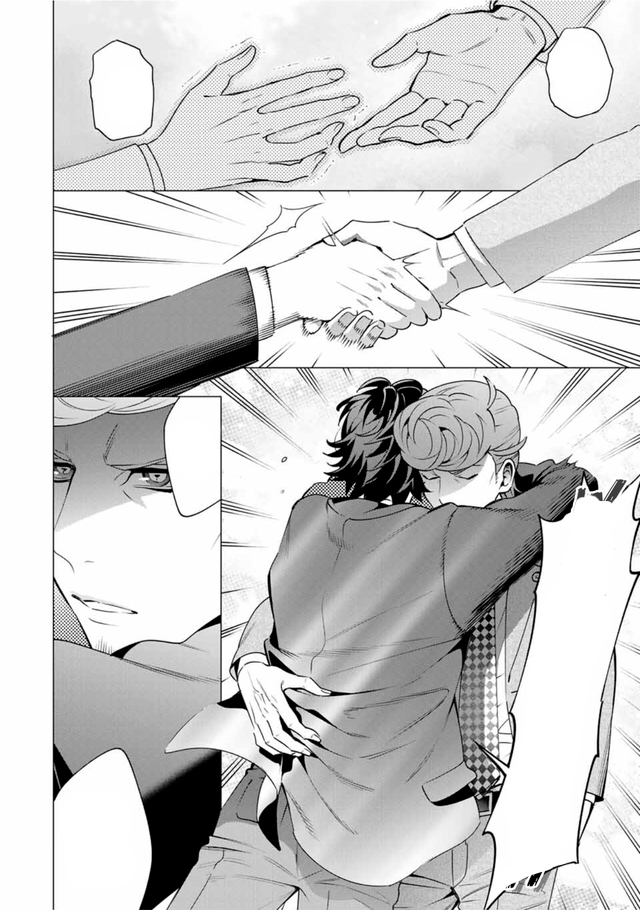
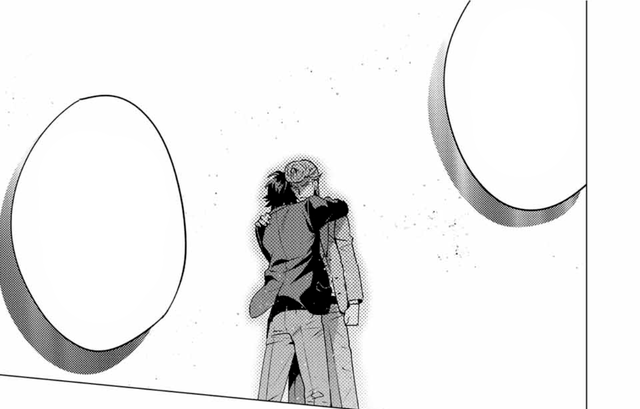
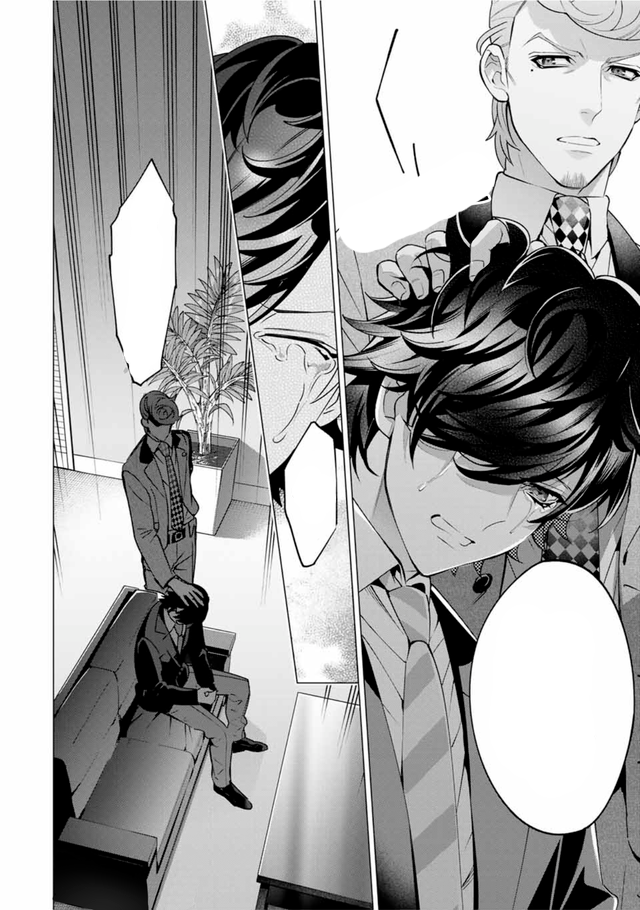
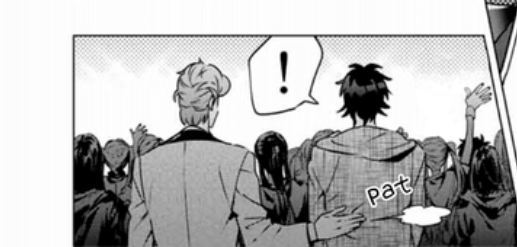
Obviously there's no romantic intention in any of these, as Jyushi is only 14 years old and they're also pretty much strangers at this point. But I mention it as a precedent that continues throughout the story.
Later in the manga: a hand on Jyushi's shoulder when he's reliving his bullying trauma; a gentle pat on the cheek to rouse him after being knocked out by Kuko's rap verse; catching Jyushi in his arms in two different manga adaptations of the 2nd DRB.
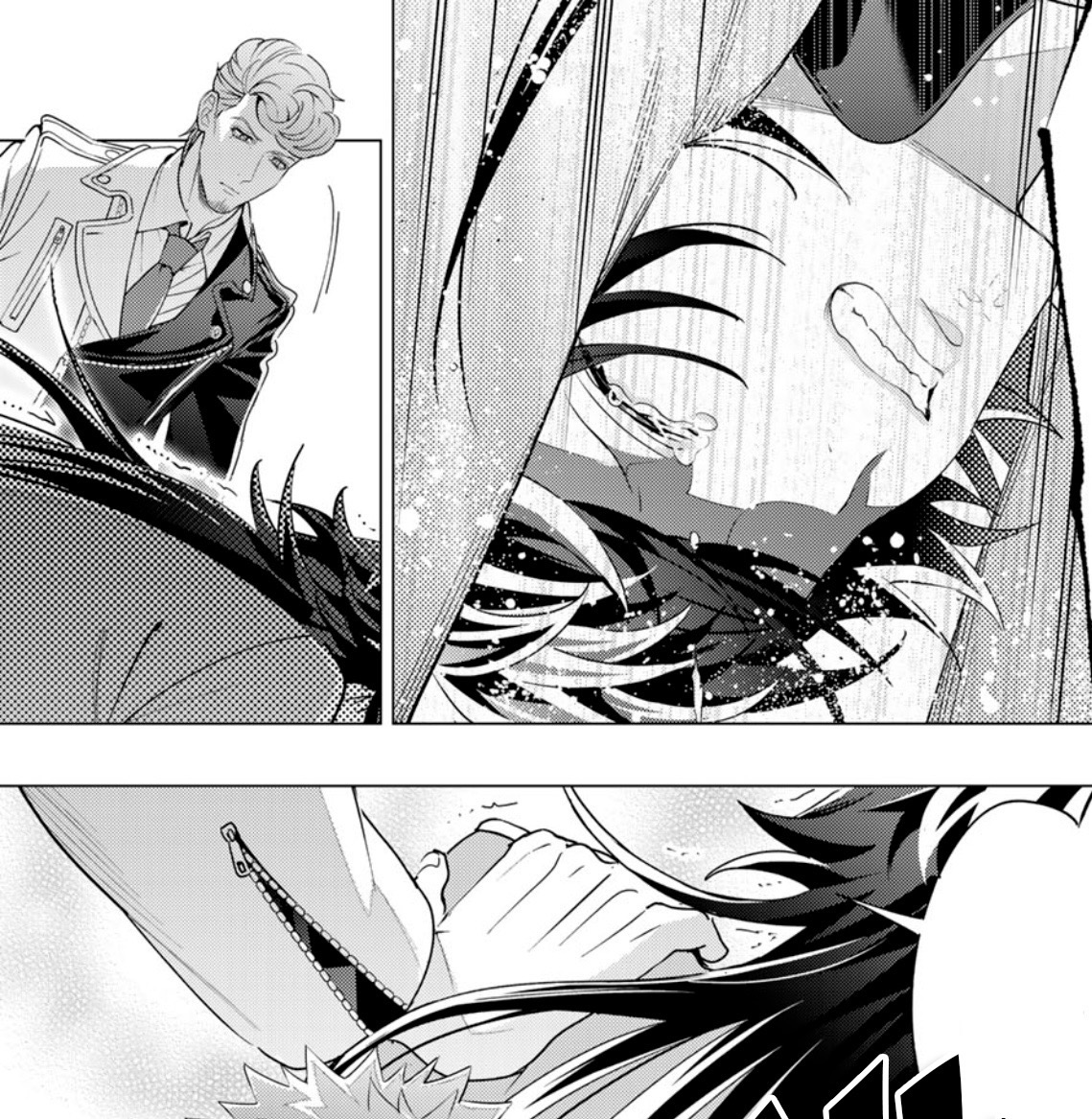
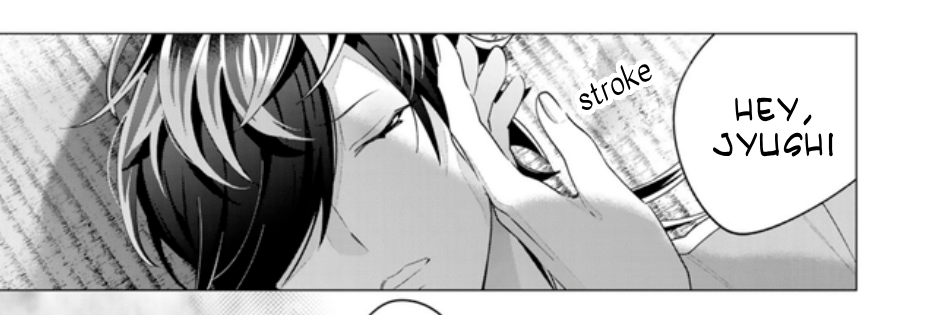
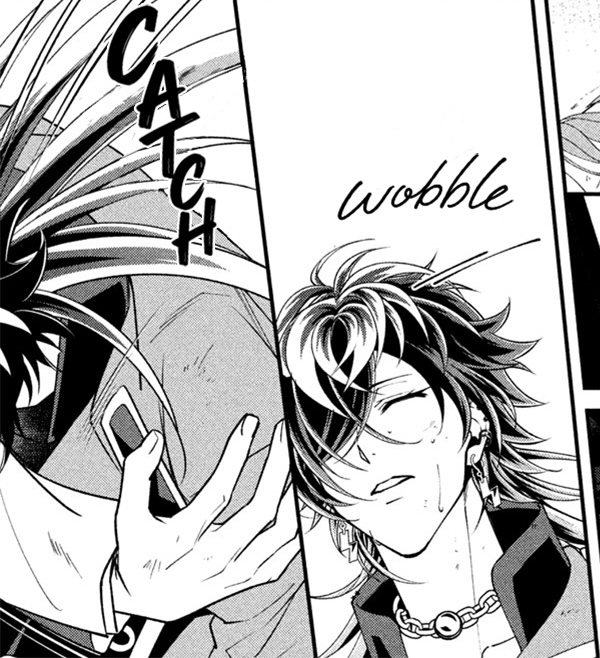
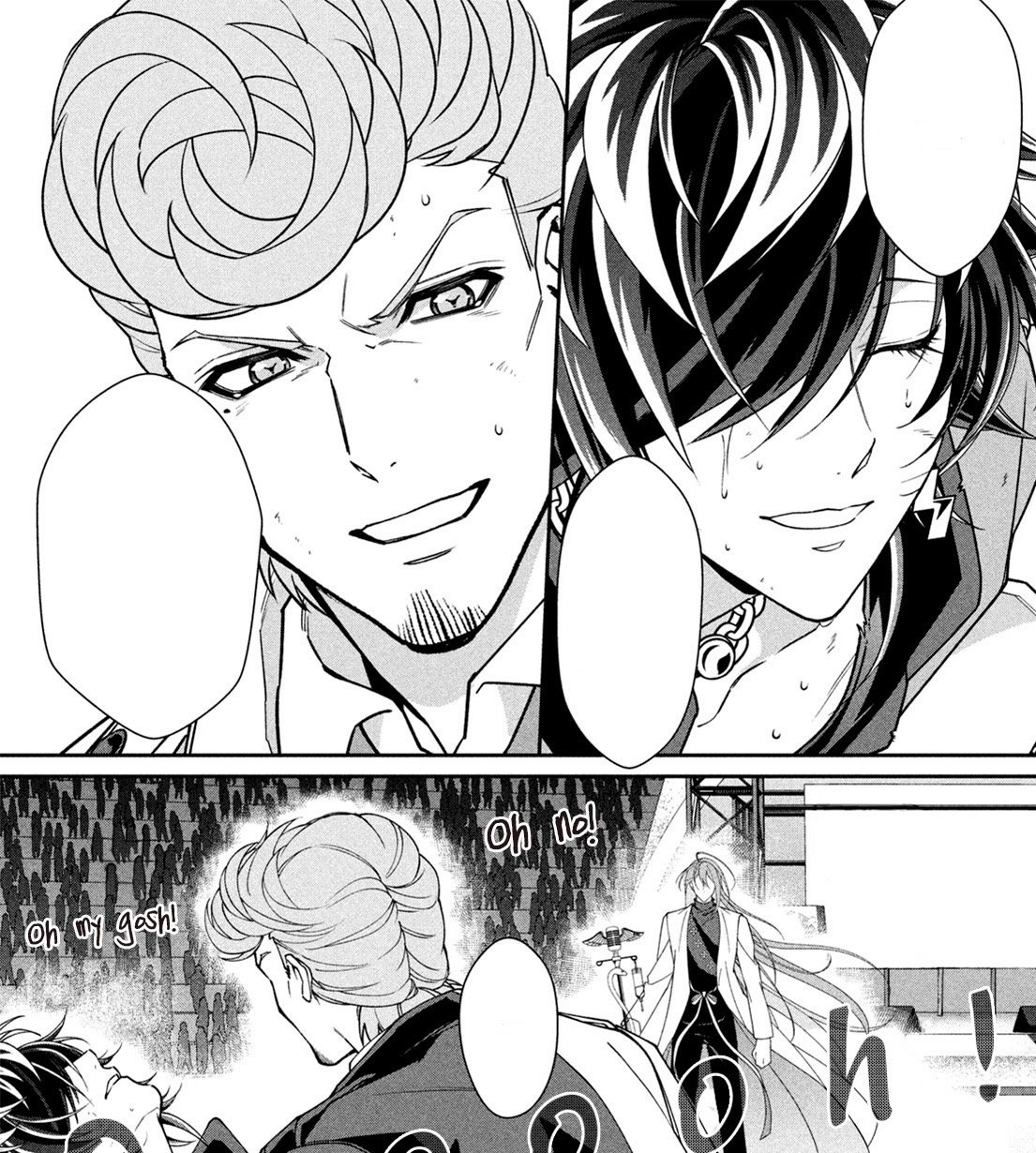
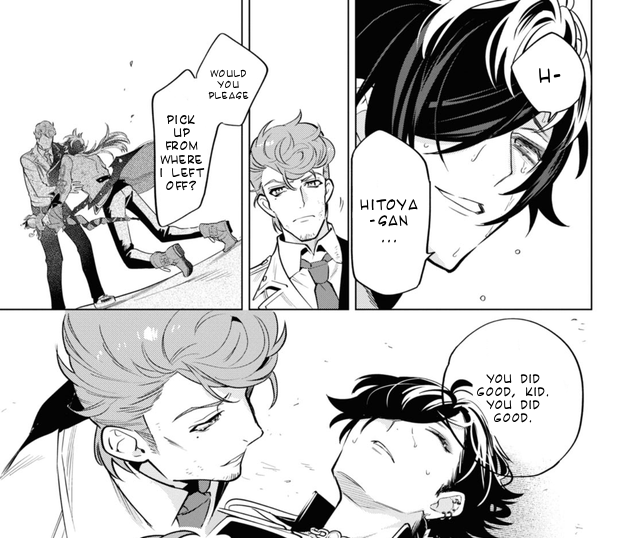
It's one of my favorite parts of their canon relationship, this easy physical affection. At first glance, you wouldn't expect gruff Hitoya to be so tender-hearted. But he very much is. It's such a sweet character trait. It gives his character a roundness. It also positions the people with whom he's physically affectionate with as self-evidently special to him.
More recent examples: the movie bonus, in which Hitoya is (again) ruffling Jyushi's hair with a big grin on his face, and Jyushi is wiping away happy tears as they lock eyes, and Kuko is there too I guess.
 |
||
The other movie bonus, in which BAT's on the throne and Jyushi has his hand on Hitoya's shoulder and he's pulling Hitoya into the big celebratory love fest and Hitoya is literally leaning in to it and he has his hand on the back of his neck (right by Jyushi's hand) because maybe he's feeling a little vulnerable about being on the receiving end for once and he's smiling proudly but also a bit bashfully. And Kuko is there too I guess.
 |
||
And Hitoya has the gall to complain about how clingy Jyushi can be? When he himself is touching Jyushi all the time?? Make it make sense.
Other tidbits
Romantic tropes: age gap, lover x beloved, protector (knight in shining armor perhaps?), hero worship, puppy love at first sight (Jyushi's POV), forbidden love (Hitoya's POV), grumpy x sunshine, friends to found family to lovers, the moon is beautiful, isn't it?
They're both vain enough to spend an inordinate amount of time on their hair. Hitoya with his daily 30 minute pompadour-crafting routine. Jyushi with his funky dye job and presumably a shitload of hairspray to keep it fluffy.
They both lean on each other when dealing with Kuko's bullshit. In the manga, they share a meaningful look when Kuko proposes they go bug hunting.
I also just really like their slight height difference. It's not awkwardly vast or barely there. It's just right! Jyushi doesn't have to bend down to kiss Hitoya on the lips, but he can just as easily plant a kiss on his forehead. Hitoya can cower in the crook of Jyushi's neck if he gets embarrassed or pull him down into a kiss if he's feeling so inclined. They can borrow each other's clothes to some extent (well, at least Jyushi can; Jyushi's wardrobe isn't exactly Hitoya's style).
I remember some fans being surprised that Jyushi is the tallest member of BAT, and not Hitoya. I just love subversive touches like that. You can have a high voice and carry around a little plushie and have a big bleeding heart and be 6'1" and strong enough to sling Kuko over your shoulder. Versatility, baby!
And it's just so soooo cute when the younger man is taller than the older man Cx
Toward a conclusion
Hitoya/Jyushi is wildly unpopular and widely reviled in the English-speaking fandom, but it's arguably a moderately beloved ship in Japan.
I've spent literally hundreds of dollars on doujinshi featuring the two of them, often involved in R-18 activities. And that's not even me being a collecting completionist (no, that would run you roughly $2000). That's how well-fed I am as a shipper. That's how well-fed we are. Because there's dozens of us.
By my estimation, they're the 6th most popular HypMic ship on doujinshi retail site Toranoana. By this metric, hitojyu is the most popular ship for both Jyushi and Hitoya on the Japanese side of fandom (i.e. the target audience).
(In first place, we have Ichiro and Samatoki in either order. Japanese fans know how to appreciate a good age gap instead of, I don't know, being fucking annoying about it and virtue-signaling via carrds.)
It's actually a very fluffy, sweet ship besides the age gap. You have to majorly twist Hitoya's character to make him into a groomer. You have to have certifiable levels of cognitive dissonance to read Jyushi's love for Hitoya as a child's love for his paternal figure because what father-son relationships are you looking at? If you absolutely insist on sticking to nuclear family roles for found family, the older-younger brother option is right there, and even spelled out in Fools Gold if you're really slow on the uptake.
You don't have to ship it, or even like it. But let's not kid ourselves here. By design, Jyushi and Hitoya's relationship is prime fujobait—just one of many such instances in this series. Were it not for the age gap, they'd be a force to be reckoned with on the English-speaking side of fandom. They kinda have it all: a chance meeting, shared history, intertwined destinies, great chemistry, compelling contrasts, physical affection, similar interests, complimentary allegiances to musical subcultures, opportunities to grow together, two different kinds of sex appeal, a shitton of trauma. The full package.
And my god, it's been a pleasure to have fallen for it, hook, line, and sinker.
Comments
 |
||